
What the Walk Actually Does — Exercise and the Emotional Life of Dogs
There's a version of your dog you know well. The one who has had their walk — loose-bodied, ears at ease, happy to find a spot and stay in it without any particular agenda. And there's the other version. The one who hasn't had it yet — a readiness in the body that hasn't been directed anywhere, a quality of alertness that is looking for something to be alert to.
Most people who love dogs know both versions immediately. The difference between them is visible, unmistakable, and felt throughout the house.
What I find interesting is that we almost always explain this difference in physical terms. The dog is tired. The dog burned off energy. The dog is calmer because they expended calories. All of that is true, in its way. But it misses what I believe is actually happening — which is something closer to emotional. Something closer to the dog having been fully in their body, in the world, in the story of their day, and having come home from that satisfied.
Exercise doesn't just change what a dog does. It changes how a dog feels. And for dogs, how they feel is everything.
Key Takeaways
Movement changes a dog's emotional state, not just their energy level — and those are different things
A dog who moves regularly carries less accumulated tension, and that settles into everything about how they live
When energy has nowhere to go, it doesn't disappear — it finds an outlet, usually not the one anyone wanted
Exercise is one of the most direct ways dogs and their people spend time in the same story
Shared walks, shared play, shared movement — these build the relationship in ways that nothing else does quite the same way
You don't have to walk perfectly or far enough or often enough by someone else's measure. The walk that happens is the one that matters.
The Emotional Life of a Dog Who Moves
We talk about dog exercise almost entirely in the physical register — weight management, cardiovascular health, joint mobility. These things genuinely matter and I wouldn't minimize them. But they are not the whole story of what movement does for a dog, and focusing only on them means we miss what I find far more compelling.
A dog who exercises consistently isn't just physically healthier. They're emotionally different. Calmer in the home, not because they've been depleted, but because they've been satisfied. More settled after activity, not because they're too tired to act out, but because they've had somewhere to go. More available for connection, not because they've been managed, but because the part of them that needed to be in the world has been in the world, and they've come home whole.
The science supports this — physical activity lowers cortisol, increases serotonin and dopamine, and over time establishes a lower baseline stress response, which means a dog who exercises regularly handles uncertainty and novelty with more ease. But the science is secondary to what I observe in practice. A walked dog and an unwalked dog are simply different dogs to spend time with. And the difference lives somewhere in the emotional register.
"Exercise doesn't make a dog quieter. It makes a dog more fully themselves — and a dog who is fully themselves is usually a very good housemate."
Energy That Has Nowhere to Go
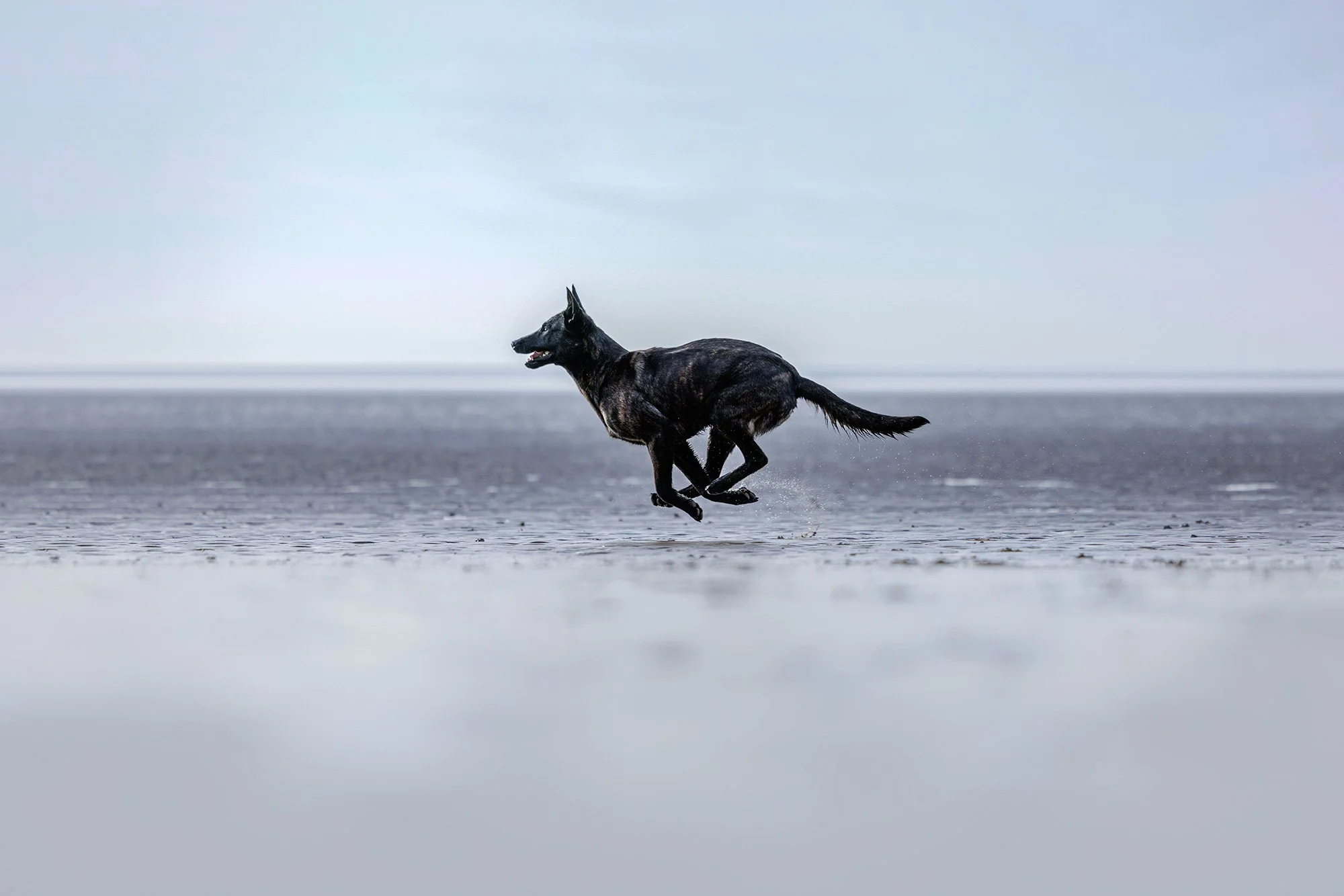
Dogs carry energy. This is not a flaw. It is the nature of a creature whose ancestors moved enormous distances, who were bred for work, whose bodies were designed for far more physical engagement than most modern lives provide.
The problem isn't the energy itself. It's when that energy has nowhere to go.
I've watched this play out many times in my dog-sitting work. The dog who destroys something on the days the walk didn't happen. The dog who barks without a clear reason for an hour in the afternoon. The dog who cannot settle, no matter how many redirections are offered, no matter what's tried — because the need is physical, and physical needs can't be argued with or trained away, only met.
These moments are not failures of training or character. They are a dog communicating, in the only language available to them, that something necessary hasn't happened yet. And when it does happen — when the walk finally occurs, when the outlet is provided — the change is usually immediate and complete. The dog settles. The house quiets. Not because anything was corrected, but because something was addressed.
How the Home Changes
The most consistent thing I hear from dog owners who establish reliable exercise routines — regardless of breed, age, temperament, or living situation — is some version of the same observation: the dog is just easier to live with.
They settle faster after coming inside. They vocalize less when they aren't the center of attention. They can be in a room where nothing is happening without turning it into a room where something is happening. They sleep soundly and wake without the wound-up quality of a body that has been waiting.
None of this is about the dog becoming less themselves. A well-exercised dog is fully themselves — curious, expressive, present. What's absent is the edge that comes from accumulated, unspent need. And the absence of that edge changes the home's atmosphere in a way that everyone in it, human and canine, benefits from.
The Walk You Take Together
Exercise doesn't only benefit the dog in isolation. When it's shared — when the walk is taken together, when the run through the park is run alongside someone the dog loves — something else happens that matters.
Dogs and their people moving together in the world is one of the most ordinary things imaginable, and one of the most quietly significant. There's a quality of communication that happens in that shared movement — the human who notices where the dog wants to linger and gives them the time, the dog who checks back to see where their person is before moving further ahead, the mutual adjustment of pace that develops between a dog and an owner who have walked together long enough to know each other.
This is not training. It isn't skill. It's relationship, expressed through the simple fact of going somewhere together.
"The walk you take with your dog is time in the same story, at the same pace. Dogs treasure that more than most owners realize."
Shared physical activity — walks, play, training done together, the morning run or the backyard game — builds the texture of the relationship between a dog and their person. It's accumulated in the body as much as in the memory. Dogs who move regularly with their people carry a particular ease in their company that is different from, and deeper than, what good training alone produces.
As They Age, Movement Becomes Even More Meaningful
For senior dogs, exercise takes on an additional dimension. Movement supports joint mobility and weight management as much as ever — but it also supports cognitive function in ways that become increasingly important as a dog ages. Regular physical activity keeps a dog engaged with the world, processing sensory information, navigating environments. Without it, the withdrawal can accelerate the very changes it helps delay.
More than that: an aging dog who still goes outside, who still walks and sniffs and participates in the world, is a dog who still experiences their life as worth participating in. The pace is different. The distance is shorter. The walk looks nothing like it used to. But the meaning of it — the being out, the moving together, the familiar ritual of going and coming back — remains.
Senior dogs deserve the walk perhaps more than any other dog. Not because they need it most urgently in a clinical sense, but because it tells them something important: we're still doing this. You are still worth this. We are still in this together.
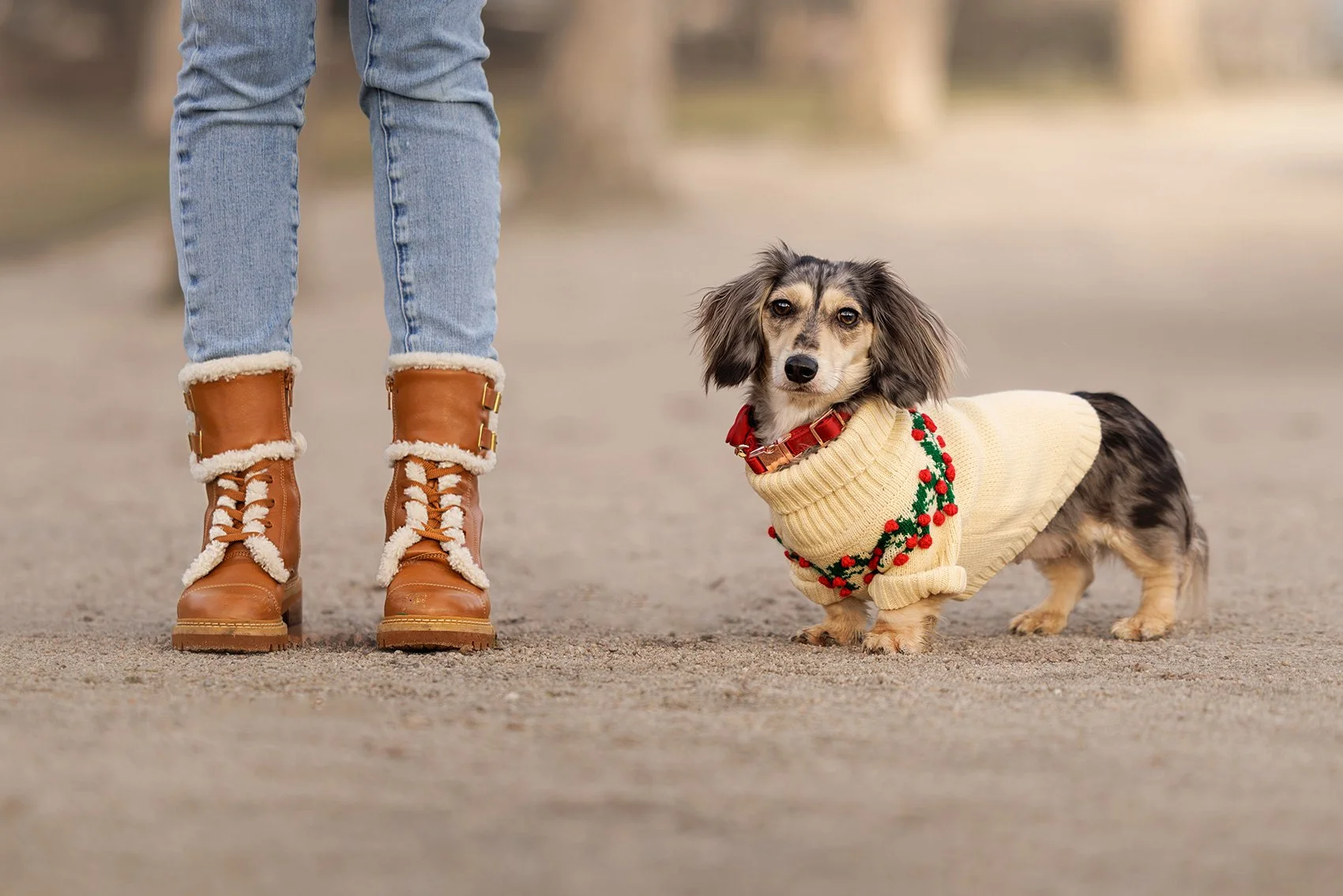
The shared quality of movement — two beings in the same story, at the same pace.
The Walk That Happens
I want to say something specifically to every dog owner who feels like they're not doing enough. Who has counted their minutes and found themselves wanting, or whose schedule has gotten away from them, or whose dog has had a shorter week than they intended.
The walk that happens is always better than the perfect walk that doesn't. The twenty minutes on a Tuesday is worth more than the planned hour on Saturday that circumstances cancelled. The imperfect, rushed, slightly-too-short walk taken in the rain by an owner who showed up for it anyway is, for the dog, simply: the walk happened today, and that means everything is okay.
Dogs don't grade these moments. They receive them.
