
Dogs Are Curious Creatures — And They Deserve Time to Think
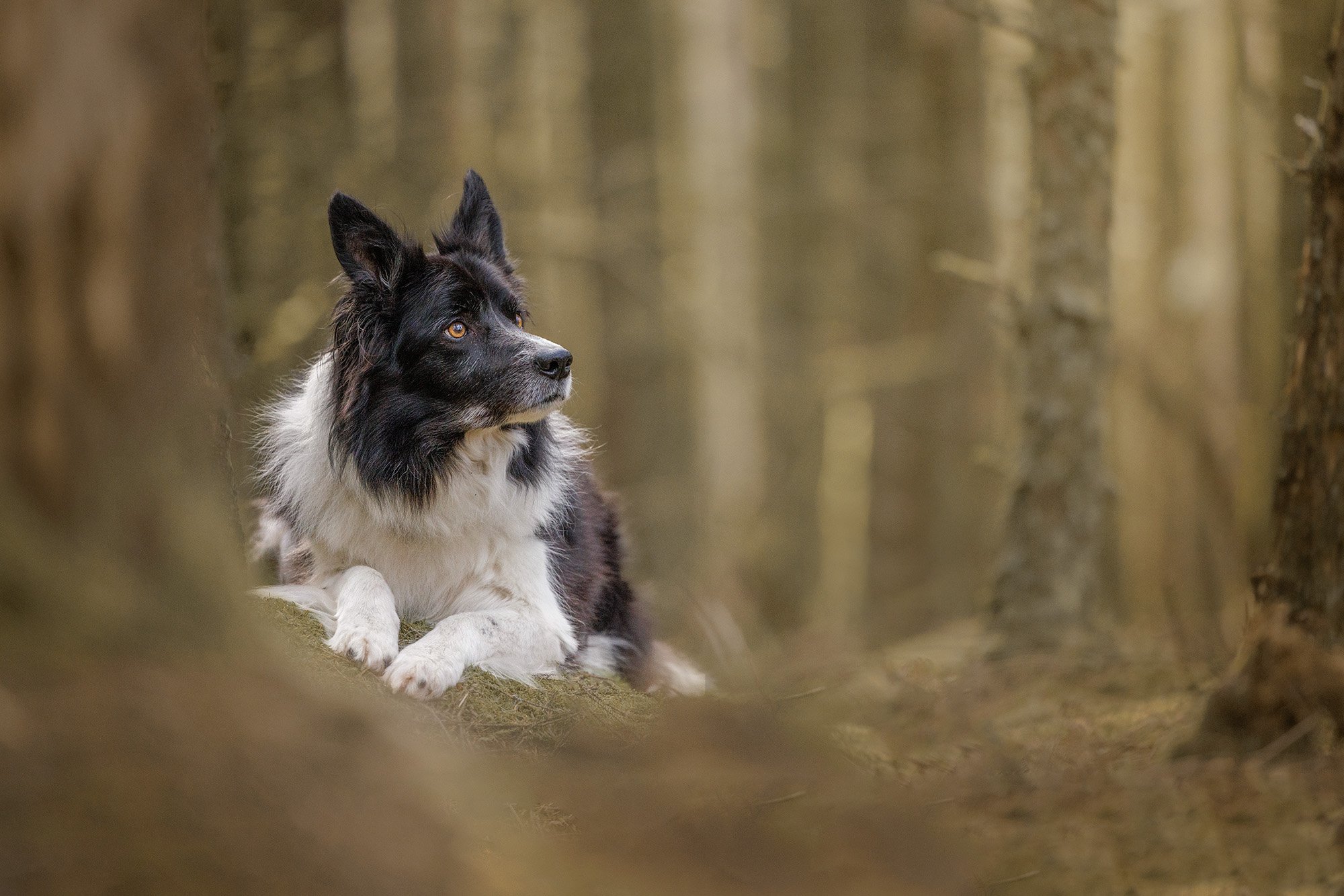
Watch a dog the moment they encounter a truly interesting smell. The way the whole body reorganizes itself around the investigation — nose dropped, pace slowed, the rest of the world falling temporarily away. There's no word for what's on a dog's face in that moment except something very close to joy. The focused, absorbed, completely-present joy of a creature doing exactly what they were built to do.
Dogs are not simple. They are curious and playful and inventive and stubborn in the best way, and they carry an inner world that most of us underestimate because it isn't expressed in words. They want to figure things out. They want to sniff and explore and chew and dig and follow a scent trail to wherever it leads. They want to engage with the world, not just exist beside it.
We talk about mental enrichment as though it were a supplement — something to add when behavior problems arise, or when a dog seems restless, or when someone at the dog park mentions puzzle feeders. But I think about it differently. Mental engagement isn't a problem-solver. It's part of honoring who a dog actually is. It's what we owe them, not because they'll act out without it, but because they deserve a life that feeds the full breadth of what they are.
Key Takeaways
Dogs are naturally curious, intelligent beings — and they need time to think, not just move
The tired that follows real mental engagement is different from physical tired, and often deeper
Sniffing is not a distraction — for a dog, it is one of the most satisfying things they can do
Enrichment doesn't require expensive equipment. It requires permission to engage with the world
Boredom in dogs isn't laziness or bad behavior — it's a smart creature without enough to think about
The moments of enrichment that matter most often cost nothing but presence
A Brain That Wants to Work
There's a kind of tired that a long walk produces, and most dog owners know it well — the loose-bodied, easily settled dog who's done enough and knows it. But there's a different kind of tired that follows mental effort, and it's the one I find most interesting to observe.
A dog who has spent twenty minutes working a puzzle feeder, or following a scent trail laid through a garden, or learning something new, often finishes with a quality of calm that is distinctly different from post-walk tiredness. It's quieter. More complete. The dog doesn't just stop moving — they actually settle, in the deep way that means something internal has been satisfied.
The effort happens invisibly, inside the dog's brain, but the result is visible to anyone paying attention. A genuinely engaged mind is a genuinely satisfied mind, and that satisfaction has a texture to it. Once you recognize it, you start wanting it for your dog as often as possible.
"The brain has its own hunger. And a dog whose mind has been genuinely fed looks different from a dog who has merely been exercised."
Doing What They Were Born to Do
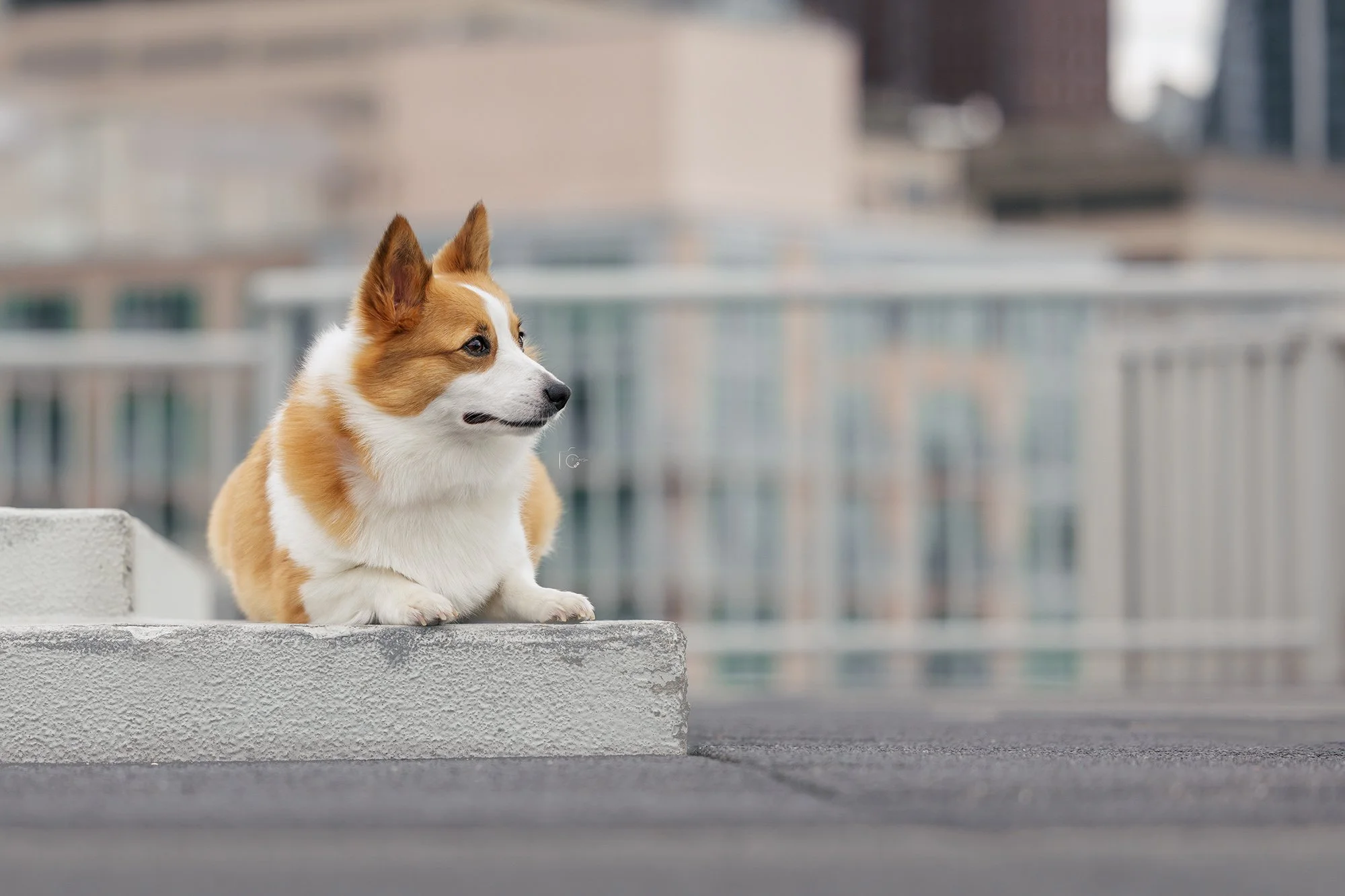
The richest enrichment doesn't ask a dog to learn something new or perform for a reward. It gives them space to do what dogs have always done, what they were built to do, what comes as naturally to them as breathing.
Sniffing is probably the most underrated thing a dog can do, and also one of the most joyful. A dog's nose processes scent information at a depth and complexity that is genuinely beyond our comprehension — they are reading the world in a way we simply cannot access. A slow walk where a dog is allowed to stop and investigate everything that interests them, at whatever pace they choose, is not a less productive walk. For the dog, it may be the most productive and satisfying walk of the week.
Chewing is deeply satisfying for most dogs — it's calming, it's engrossing, and it connects to something old and instinctive in them. A dog with appropriate things to chew is a dog with a reliable outlet. It isn't about redirection or preventing bad behavior. It's about giving them access to something they genuinely enjoy.
Exploring new environments gives a dog's brain something real to process — new smells, new sounds, new configurations of the world. Even a different route, a new park, an unfamiliar section of a familiar place, creates the kind of sensory novelty that is genuinely tiring and genuinely interesting for a dog.
Problem-solving through food — scatter feeding, puzzle toys, hiding treats to be found — turns the act of eating into a game, and games are something dogs were made for.
What Happens When There's Nothing to Think About
Dogs don't communicate boredom through a sigh and a glance at the clock. They communicate it through the household — through the thing that got chewed that shouldn't have been, the barking that escalated without an obvious cause, the inability to settle even when nothing is happening, the focused and relentless demand for attention that can make an afternoon exhausting.
These behaviors are almost always framed as problems to be managed. I see them differently. A dog who is acting out from boredom is a smart, capable, curious creature whose intelligence has had nowhere to go. That isn't a character flaw. It's a reasonable response to an unfulfilling situation.
I've watched this shift dramatically in dogs I've cared for over the years. A dog who seems difficult or high-maintenance at the start of a stay will often change visibly within a day or two of having real enrichment woven into their day. Not because they've been corrected or trained — because they've finally had something to think about, and that's what they needed.
"The best enrichment moment isn't the most elaborate one. It's the one where a dog is completely, happily, unself-consciously themselves."
Enrichment That Fits Into Real Life
The beautiful thing about mental enrichment is that it doesn't require a separate slot in the day or a new set of expensive equipment. It fits inside the moments that already exist.
A handful of kibble scattered in the garden before dinner, instead of dropped into a bowl. A pause in a walk to genuinely let a dog investigate that particular patch of ground for as long as they want. A frozen stuffed toy left out during a quiet afternoon. A few minutes of searching for a hidden treat before the leash goes on. These aren't additions to an already full day — they're upgrades to moments that are already happening.
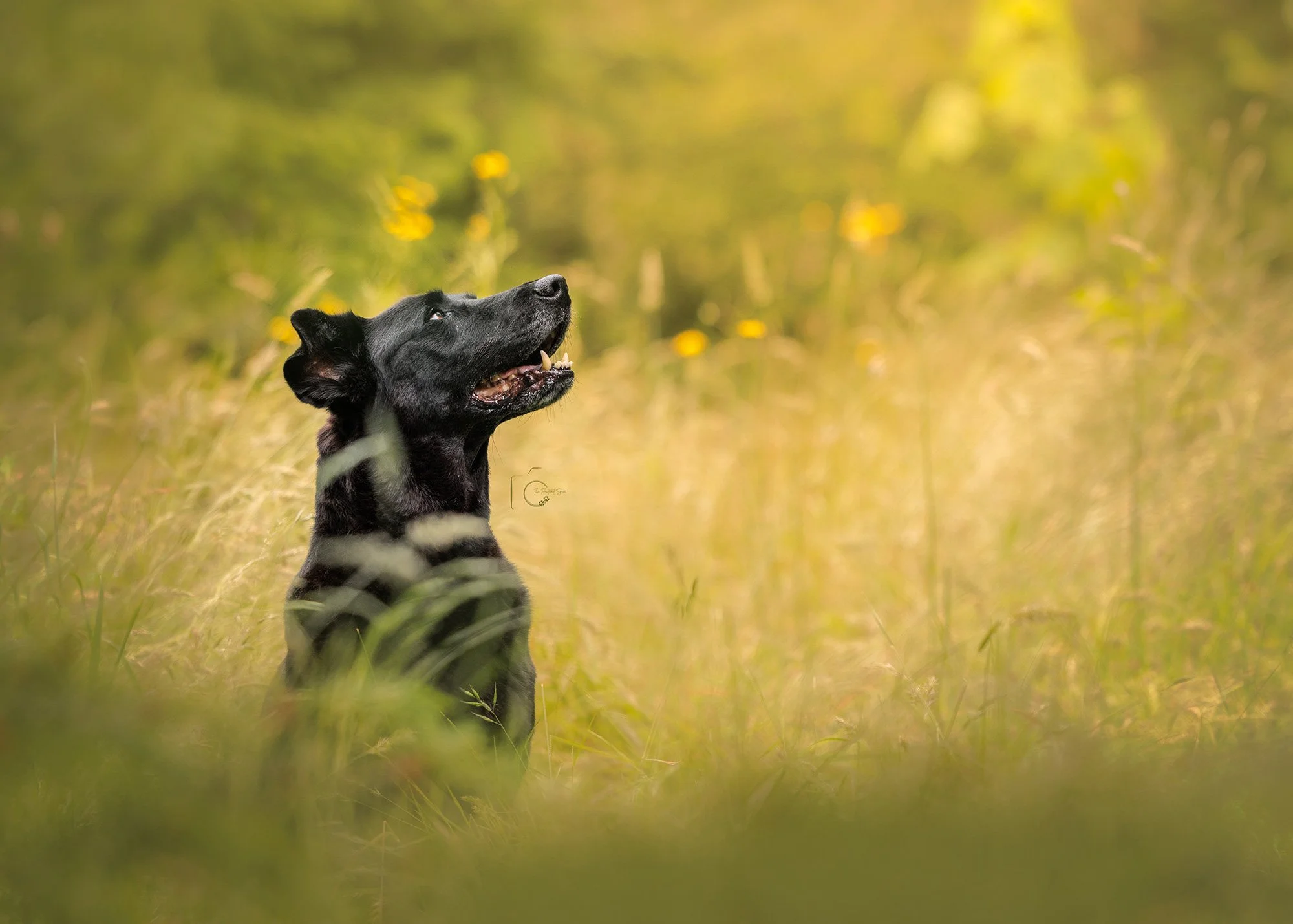
What they require is less about time and more about attention. Noticing what lights your dog up. Giving them permission to follow that interest. Trusting that a dog who is absorbed in something joyful is doing exactly what they should be doing.
