
Daily Habits That Shape a Happy Dog — And Why the Small Moments Matter More Than You Think
We talk a lot about the big moments in a dog's life. The first beach trip. The off-leash run through an open field. The afternoon nap in a patch of sunlight that lasts longer than expected. These things are real and they matter. But they are not, I've come to understand, what a dog's happiness is actually made of.
What makes a dog genuinely happy is Tuesday. The particular sound a leash makes being lifted from the hook. The bowl placed in the familiar corner of the kitchen. The cushion claimed after a walk that ended, as it always does, at the same gate. These aren't dramatic events. They aren't the moments we photograph or remember. But they are the texture of a dog's life — the repeated experiences that accumulate into something a dog can feel as theirs.
Dogs don't measure happiness the way we do. They don't save it for the holidays. They live inside the ordinary with a completeness most of us spend a lifetime trying to find. And the ordinary, for a dog, is built from small, consistent, daily habits. Not grand gestures. Not perfect days. Just the familiar rhythm of a life lived alongside someone they love.
Key Takeaways
Dogs live most fully in the ordinary moments — and the ordinary is built from small, repeated rituals
A consistent mealtime is one of the simplest ways to tell a dog that the world is unfolding as expected
Movement together is not just exercise — it's shared time in the same story, and dogs love that story
Play is how many dogs say I am happy to be here with you — it is connection, not just activity
Grooming done gently and regularly teaches a dog that being cared for is safe, and that trust extends everywhere
A dog who can genuinely rest is a dog who feels safe enough to stop — and that is a gift
The Sacred Ritual of Mealtime
Food is the most reliable signal in most dogs' days. They track it with an accuracy that puts most alarm clocks to shame, and they feel the difference between a mealtime that arrives when expected and one that doesn't. Not because they're hungry in a desperate way — though hunger is part of it — but because a consistent mealtime tells them something more important than the meal itself: the day is unfolding as it should.
There's something quietly profound about that. A bowl placed at the same time each day is not just nutrition. It's a daily confirmation that the world is stable, that the person who fills it is there, that things are as they should be. I've watched dogs visibly settle at the sound of food preparation — not just with anticipation, but with something that looks a great deal like relief.
However you feed your dog, whatever your schedule looks like — the consistency you've built into mealtimes is doing more than keeping your dog nourished. It's telling them, every single day, I thought of you. I'm here.
Movement as a Daily Promise
Exercise tends to get framed in terms of requirements — how much a dog needs, what breeds need more, what the guidelines say. But I think that framing misses what movement actually feels like from the inside of a dog's experience.
A dog before their walk and a dog after their walk are recognizably different creatures. Before: a readiness in the body, an alertness that wants somewhere to go. After: a quality of settled ease, a dog who has been in the world and found it good and come home to rest in that goodness. The walk itself is often the best part of a dog's day — not because they need the miles, but because the walk means we go out into the world together, and that togetherness is something dogs love with their whole bodies.
When a dog knows that movement is coming — that the leash will be lifted, that the door will open — they don't need to spend energy wondering about it. And that ease, that quiet confidence that the good thing will happen, spills into everything else about how they carry themselves through the day.
Play Is a Love Language
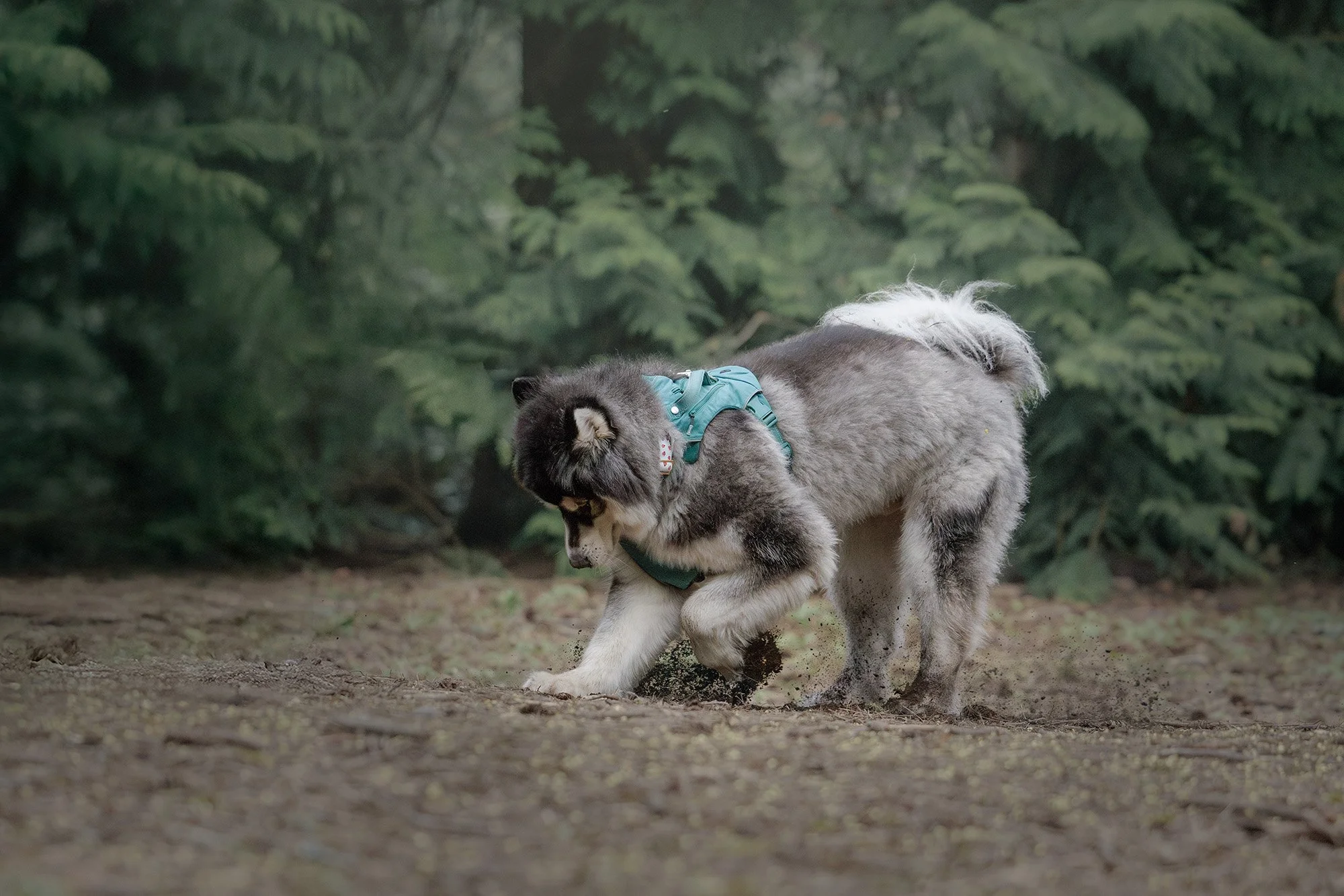
Play tends to get filed under exercise, as though it were simply a more vigorous version of a walk. But play is something different entirely. It's the way many dogs experience pure, uncomplicated joy — the leap, the chase, the tug game that somehow never gets old. And it's one of the clearest ways dogs communicate something essential to the people they love: I want to do this with you. Right now. You.
"A dog who plays with their person has learned the best possible thing about them — that they can be delightful together."
The game matters less than the quality of presence during it. A focused five minutes of tug, with a human who is genuinely there, does more for a dog than a half-hour of distracted interaction. Dogs are remarkably attuned to the difference. They know when they have you, fully, and they know when they're just adjacent to you. What they remember is the former.
Some of the most joyful play I've witnessed wasn't with trained, socialized dogs in perfect home environments. It was with street dogs in India — dogs who had never been taught to fetch, never had a dedicated toy, never known a scheduled play session in their lives. What they knew was this: when a person got down to their level, made themselves small and available, something lit up. Play doesn't require training. It doesn't require the right toy or the right space. It just requires one person who shows up with genuine attention. Dogs have always known how to respond to that.
Play is not something you have to be good at. It just requires showing up to it.
The Attentiveness of Grooming
Brushing a dog, checking their paws, cleaning their ears — these tend to get treated as tasks to complete rather than moments to inhabit. But there is something genuinely important in them beyond the practicality.
A dog who is handled gently and regularly learns that being cared for is safe. That hands touching them predict nothing alarming. That they can relax into the attention rather than brace against it. This trust, built slowly through routine handling, extends far beyond grooming — it shapes how a dog feels during vet visits, how they respond when a stranger reaches toward them, how their body holds itself in unfamiliar hands.
And grooming is also, quietly, how we notice. The different texture of a coat, a flinch in an unexpected place, a nail growing more quickly than the others. Consistent handling keeps us paying attention, in the best possible way.
I've seen this joy expressed in the most uncomplicated way possible — a dog who has just been groomed and knows it. There's a particular swagger to a freshly brushed dog wearing a new collar for the first time. They carry themselves differently. A little taller. A little more deliberate. As though they understand, in their own way, that they've been attended to with care — and they want the world to know.
The Art of Resting Together
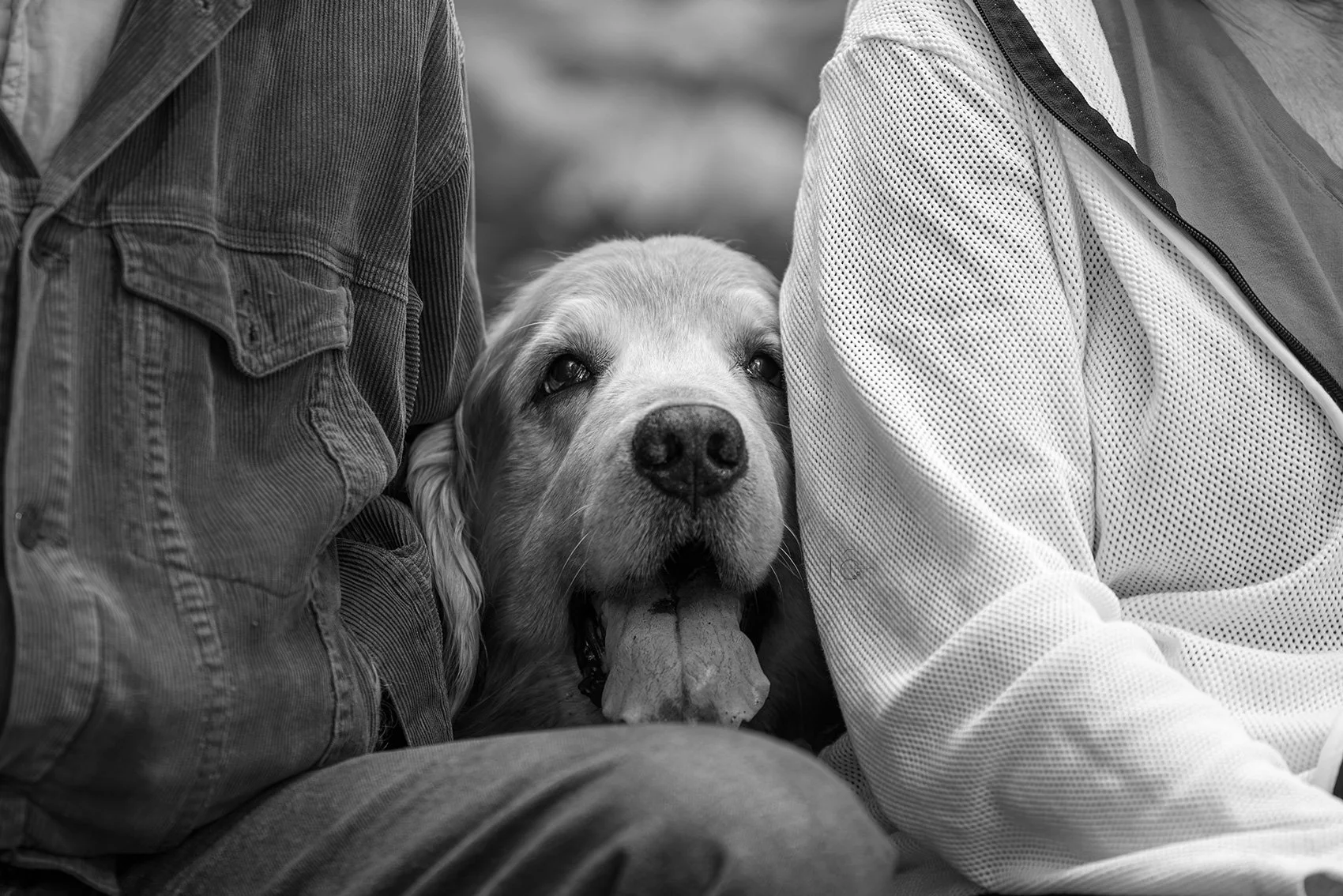
Rest is the part of a dog's daily life that doesn't make it into advice columns very often. But it matters. A dog who can genuinely, fully rest — not just stop moving, but actually power down into sleep or quiet — is a dog who feels safe enough to let their guard down. And letting your guard down requires trust.
Dogs balance activity and rest naturally when their days have shape. After a walk, after play, a dog who knows what their routine looks like will settle without being asked. They know this part. They've done it a thousand times. And that familiarity — that knowledge of this is the quiet part now — is itself a form of peace.
There is something beautiful about a dog who can sleep in the middle of the day, loose-limbed and deeply gone, because they trust the world enough to stop watching it.
