
The Walk Is the Best Part of Their Day — And What That Tells Us About Exercise
There's a question that nearly every devoted dog owner carries somewhere in the back of their mind: Am I doing enough?
It's a fair question. It's also, I think, usually being asked by exactly the wrong person — because the owners who worry about it are almost always the ones paying attention, which means they're already doing more than they know. The people who aren't doing enough rarely stop to wonder.
But I want to address it honestly, because the anxiety behind it is real. The number of minutes and hours that dog exercise advice dishes out — thirty minutes, sixty minutes, ninety minutes, twice daily, three times weekly for high-energy breeds — implies a precision that doesn't match the actual experience of living with a specific dog, with a specific history, in a specific life. And precision-based guilt serves no one, least of all the dog.
What actually matters, in my experience across hundreds of dogs and years of photography sessions, is not the number. It's the relationship your dog has with movement — whether it's something that happens regularly enough to be part of how they understand their day, and whether the way they feel after it tells you it was right for them.
Key Takeaways
There is no universal number — exercise needs are as individual as the dog in front of you
The walk is often the best part of a dog's day, and that tells you more about its importance than any guideline
Breed is a starting point for understanding your dog's needs — not a verdict about who they are
Puppies need movement, but their growing joints need gentleness — short and varied beats long and sustained
Senior dogs still want to move. Often more than we let them. Let them lead the pace
The goal isn't a tired dog. It's a dog who has been in the world today and come home feeling good about it
The Look Before the Walk
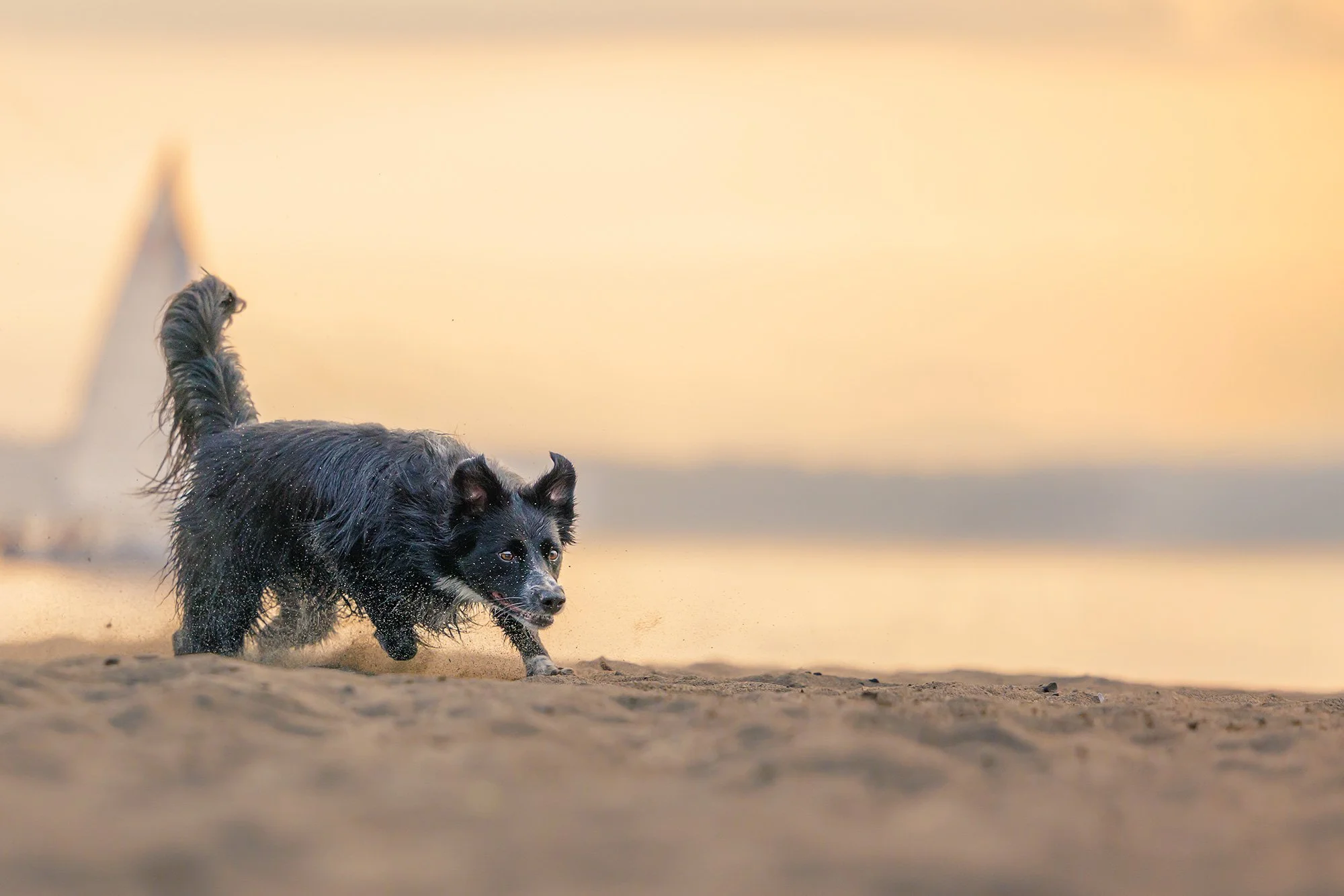
Watch a dog who knows a walk is coming. The ears. The posture. The way the whole body reorganizes itself around the anticipation. There's no word for what's on a dog's face in that moment except something very close to joy — a full-body, barely-contained, entirely sincere expression of yes, this, this is what I want.
That moment tells you more about the importance of exercise than any scientific guideline. The walk isn't maintenance for a dog. It isn't a checkbox item in a list of daily requirements. It's one of the best parts of their day — and they've been waiting for it, and they know it's coming, and that knowing is its own pleasure.
I think about this when I see dog owners calculating minutes or comparing their habits to what they read online and finding themselves somehow wanting. You are not providing a service. You are doing something your dog loves. That's worth something quite different.
Your Dog, Specifically
There is no formula that produces a number, applied to any dog, that reliably answers the question of how much is enough. There are guideposts — breed tendencies, life stage norms, the general wisdom accumulated over decades of veterinary observation. These things matter. But they are inputs, not answers.
A Husky and a Basset Hound were bred for entirely different kinds of work, and that history shapes what they find satisfying, what their bodies were built for, and what happens when they don't get enough of it. Breed gives you a place to start.
But I've met countless dogs whose reality differed significantly from their breed's reputation. The golden retriever who needed two hours of off-leash running to feel settled, while the breed profile suggested forty-five minutes would do. The malinois who was perfectly content with moderate exercise because of her particular temperament and history. The rescue dog whose needs were entirely unknown and had to be discovered through patient observation over months.
Your actual dog is the most reliable data source you have. Watching how they are after different amounts of activity — energized and satisfied, or still buzzing, or actually overdone and tired — will tell you more than any chart.
Puppies: Gentleness Is Not Insufficiency
Puppy owners often feel the pull to do more. The puppy is so energetic, so seemingly inexhaustible, so clearly ready for the next thing the moment the last thing ended. And so the instinct is to give them more, longer, further.
But a puppy's joints are growing. The bones are developing. The structures that will carry this dog through ten or fifteen years of life are still being built, and sustained high-impact exercise in the first year — particularly for larger breeds — can lay the groundwork for problems that only appear years later. This is one of those places where love needs to look like restraint.
What puppies need is movement that matches where their bodies actually are. Shorter outings, more frequently. Play sessions in a safe space. Social exposure and exploration, rather than distance walked. The goal isn't to tire them out — it's to give them enough varied, gentle engagement that they can sleep and grow and develop in the way they're meant to.
A puppy who gets this doesn't become less active over time. They become a dog whose body was given the chance to build properly, and who has the physical foundation to be fully active for the rest of their life.
Adult Dogs: Finding What's Right for Them
The middle years of a dog's life are when exercise feels most intuitive — because adult dogs are generally good at communicating their needs, and because their bodies are robust enough to give you clear feedback. They're getting too little exercise if they're restless, difficult to settle, finding things to chew and bark at and investigate that you'd rather they left alone. They're getting too much if they're stiff in the morning, reluctant to start the walk, limping subtly on the way home.
What you're looking for — what tells you you've got it roughly right — is a dog who can settle calmly after activity. Not crashed from exhaustion, but genuinely at ease. The dog who finishes the walk and finds their spot and sighs and actually rests. That dog has had what they needed.
"The right amount of exercise isn't the maximum amount they can handle. It's the amount that brings them to themselves."
Senior Dogs: Still Moving, Still Alive to It
The instinct to protect aging dogs from effort is deeply human and deeply understandable. They're slower. They're stiff some mornings. They hesitate at the stairs they used to take at a run. And so we protect them, restrict them, let them rest more and more until the walks get shorter and shorter and eventually stop.
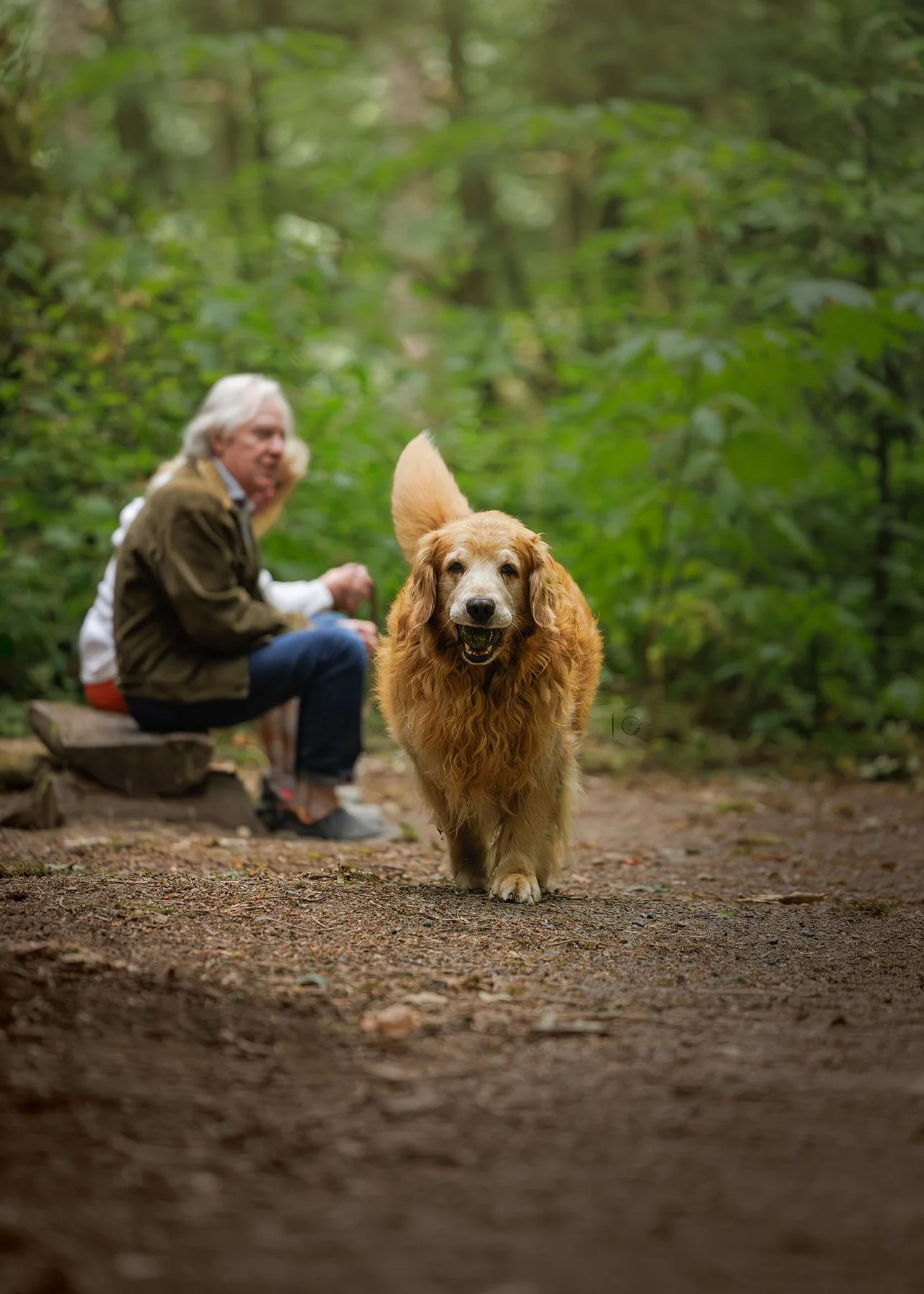
But senior dogs, in my experience, mostly want to keep going. At their own pace, on their own terms, for whatever distance they choose — but going. Movement is how they stay connected to the world. It's how their joints stay mobile, their weight manageable, their minds engaged with the smells and sounds of a life that is still, despite everything, worth participating in.
The pace changes. The distance shortens. The walk becomes about the dog's joy, not about a number. But the walk itself — the being outside, the moving through the world together, the familiar rhythm of the two of you — that matters until very close to the end.
Let senior dogs lead. They know what they can do better than anyone.
