
Play, Movement, Joy: The Many Ways Dogs Stay Active — And Alive to the World
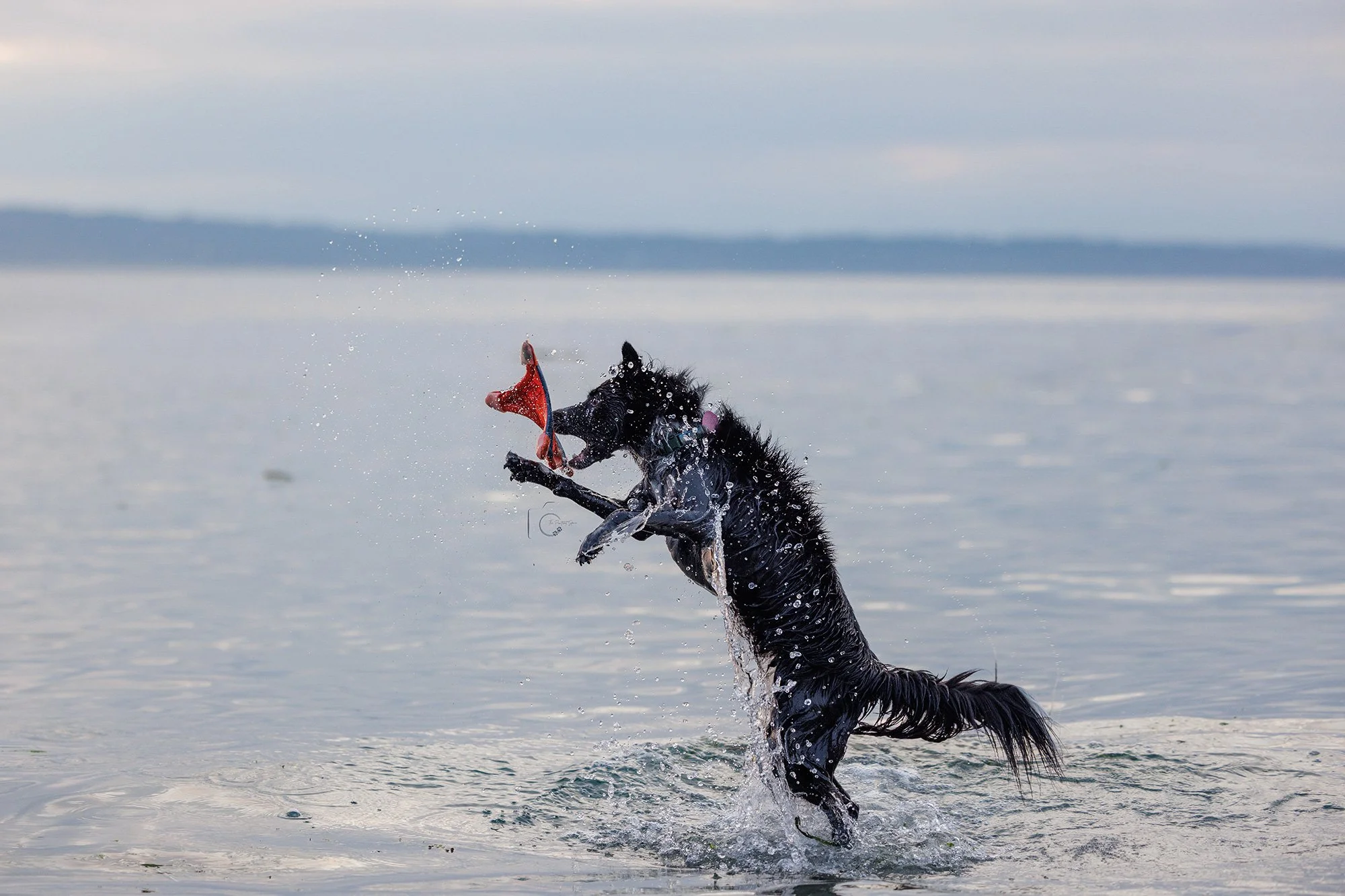
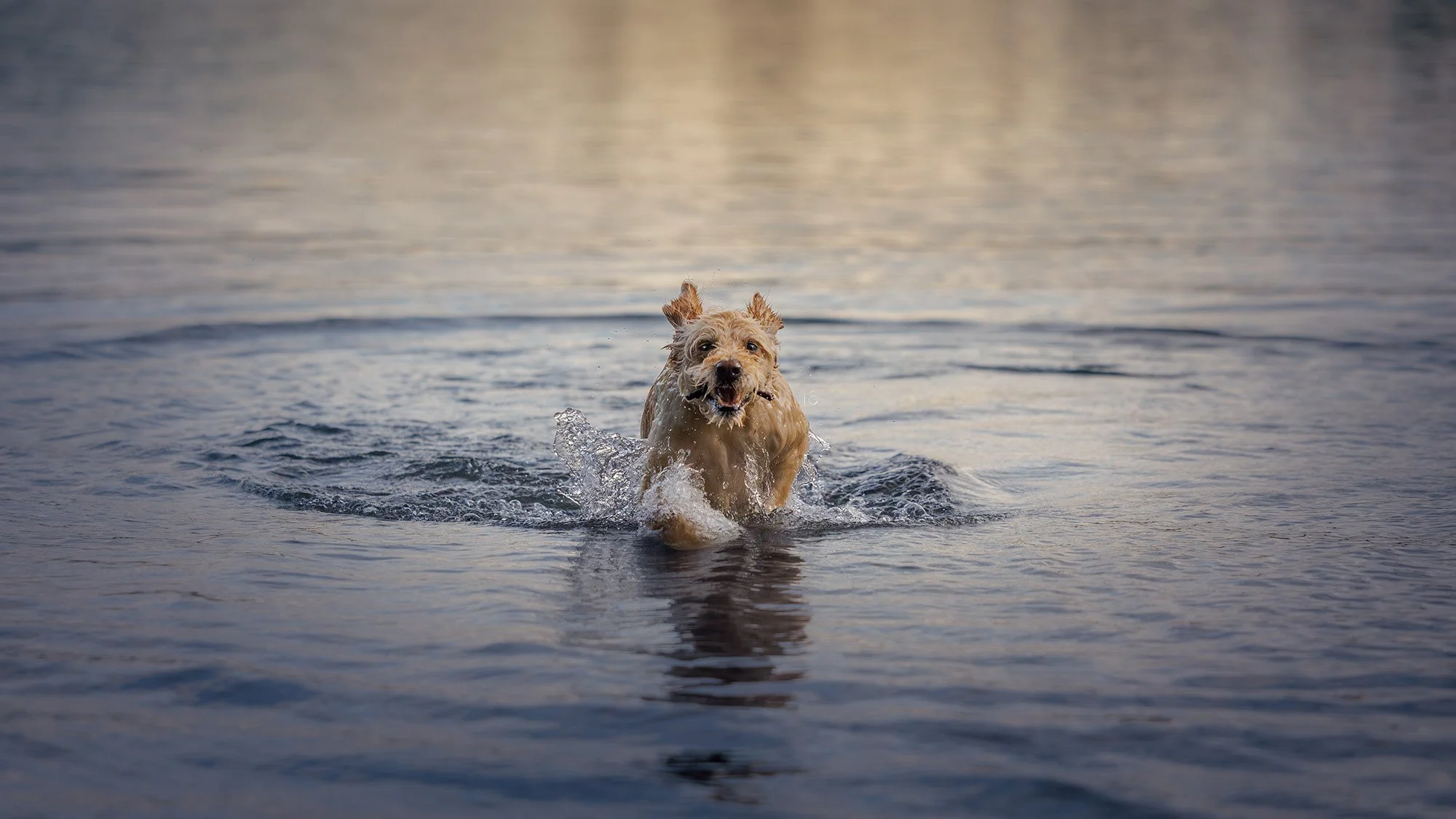
There is a specific joy that a dog carries when they are really playing. Not the polite engagement of a dog going through the motions, but the full-body, ears-back, completely-undignified joy of a dog who has forgotten everything except the game. The zoomies that appear from nowhere and stop just as suddenly. The tug game that a dog has decided, unilaterally, they are going to win. The fetch that has been going for fifteen minutes and shows no signs of becoming something a dog would choose to stop doing.
I love watching dogs at play because you can see who they really are. All the social grace and careful behavior falls away, and what's left is something entirely honest — a creature experiencing pure, present, uncomplicated delight. That delight is not a bonus feature of a dog's life. It is part of what a life worth living looks like, from the inside.
We talk about exercise almost exclusively in practical terms. Distance walked. Minutes logged. Calories burned. Energy discharged so the house can be peaceful in the evening. And those practical outcomes are real and worth caring about. But somewhere in the reduction of movement to management, we lose track of what movement actually means to a dog. Movement is how dogs are in the world. Walking, playing, running, searching — these are how dogs participate in the life around them. And a dog who participates in many ways is a dog who is fully, richly alive.
Key Takeaways
Walks are the reliable foundation of a dog's daily movement — and they matter more than any other single thing
Play is where joy lives, and joy is a legitimate and important part of a dog's health
A game of fetch or tug is not just exercise — it's a dog telling you exactly what kind of moment they want to have with you
Training counts as physical activity, and it builds the most important thing between a dog and their person: trust
Enrichment satisfies the parts of a dog's nature that physical exercise doesn't always reach
The best activity is the one you'll both actually enjoy — there is no hierarchy of correct choices
Walks: The Foundation That Everything Else Builds On
Walks have their reputation for good reason. They support cardiovascular health, joint mobility, weight, and digestion. They take dogs outside, into the world, where there are smells and sounds and sights that exist nowhere else and cannot be replicated by any indoor activity. A dog who walks regularly is a dog who has access to the world — and that access matters to them in a way that goes beyond what any health metric captures.
A walk is also sensorially rich in a way that is easy to underestimate. To a dog, the same route walked on different days is not the same route — it's a different story, told through smell, about who was there and when and what they were doing. The morning walk is a newspaper. The afternoon walk is an update. Dogs are not walking to cover distance. They're walking to read the world.
And then there is what the walk means as a shared act. Two creatures, outside together, in the same story, moving at something approaching the same pace. That togetherness is not incidental to the walk. For many dogs, it is the whole point.
Play: Where Joy Lives
If you want to know what your dog thinks is the best possible way to spend fifteen minutes, watch what they do when they have completely free choice. Most dogs, given a willing person and no particular agenda, will show you something that looks very much like an invitation to play.
Play introduces a quality of movement that walking doesn't replicate — the burst, the pivot, the full-body commitment to catching or chasing or winning. In fetch, there is the launch and the sprint and the return. In tug, there is the brace and the pull and the release. In the spontaneous chase around the living room that started for no clear reason, there is whatever that is, which is apparently something dogs find very satisfying.
"A dog at play is a dog in their full self — unguarded, unperformed, completely alive to the moment."
But play is not only about the movement. It's about what happens in the space between a dog and their person when they play together. There's a quality of shared momentum — communication through movement rather than instruction, trust demonstrated through a game rather than a command. A dog who plays freely with their person knows something about that person that no amount of good training conveys: that they can be fun. That they can be present and silly and engaged. That they're not just the provider of meals and walks and rules, but someone worth being delighted by.
Play, done with genuine presence and willingness, builds the relationship. Not as a side effect, but as its primary purpose.
Training: More Physical Than It Looks
Training rarely gets counted as exercise, but it should. The physical dimension of a training session — the sits and downs and recalls, the careful coordination of body to cue — uses genuine energy, engages muscles in focused ways, and leaves many dogs pleasantly tired in a way that pure physical exercise doesn't always achieve.
More importantly, training builds the channel of communication between a dog and their person that makes every other interaction easier. A dog who understands what their person is asking, who trusts their person's cues and knows how to respond to them, is a dog who can relax during downtime. Not because they've been made obedient, but because the relationship has been made clear. And clarity is rest, for a dog.
Short, positive training sessions woven into the fabric of a day — not lengthy formal sessions, but the natural practice opportunities that daily life offers — are one of the most efficient investments a dog owner can make. In the time it takes to practice a recall in the backyard or run through some impulse control at the front door, you're exercising the dog, building trust, and deepening the relationship simultaneously.
Enrichment: The Quiet Kind of Satisfied
Enrichment activities — puzzle feeders, sniff games, treat searches, chew items, anything that asks a dog to use their nose or their problem-solving — look almost nothing like exercise. The movements are small and intermittent. The activity is calm. It can be genuinely hard to look at a dog working a puzzle feeder and think of it as vigorous.
But the tired that follows real mental engagement is its own particular thing. A dog who has spent twenty minutes genuinely working a food puzzle often finishes with a quality of settled satisfaction that a long walk doesn't always produce. Something has been used up — not burned off in the physical sense, but genuinely spent — and the dog who has spent it is a dog who can rest without looking for what comes next.
Enrichment doesn't live in a separate category from physical activity. It lives alongside it, completing what physical activity doesn't. And the dogs who have access to both — who move their bodies and use their minds in a given day — tend to have an ease and availability that is visible to anyone paying attention.
The Best Activity Is the One You Both Enjoy
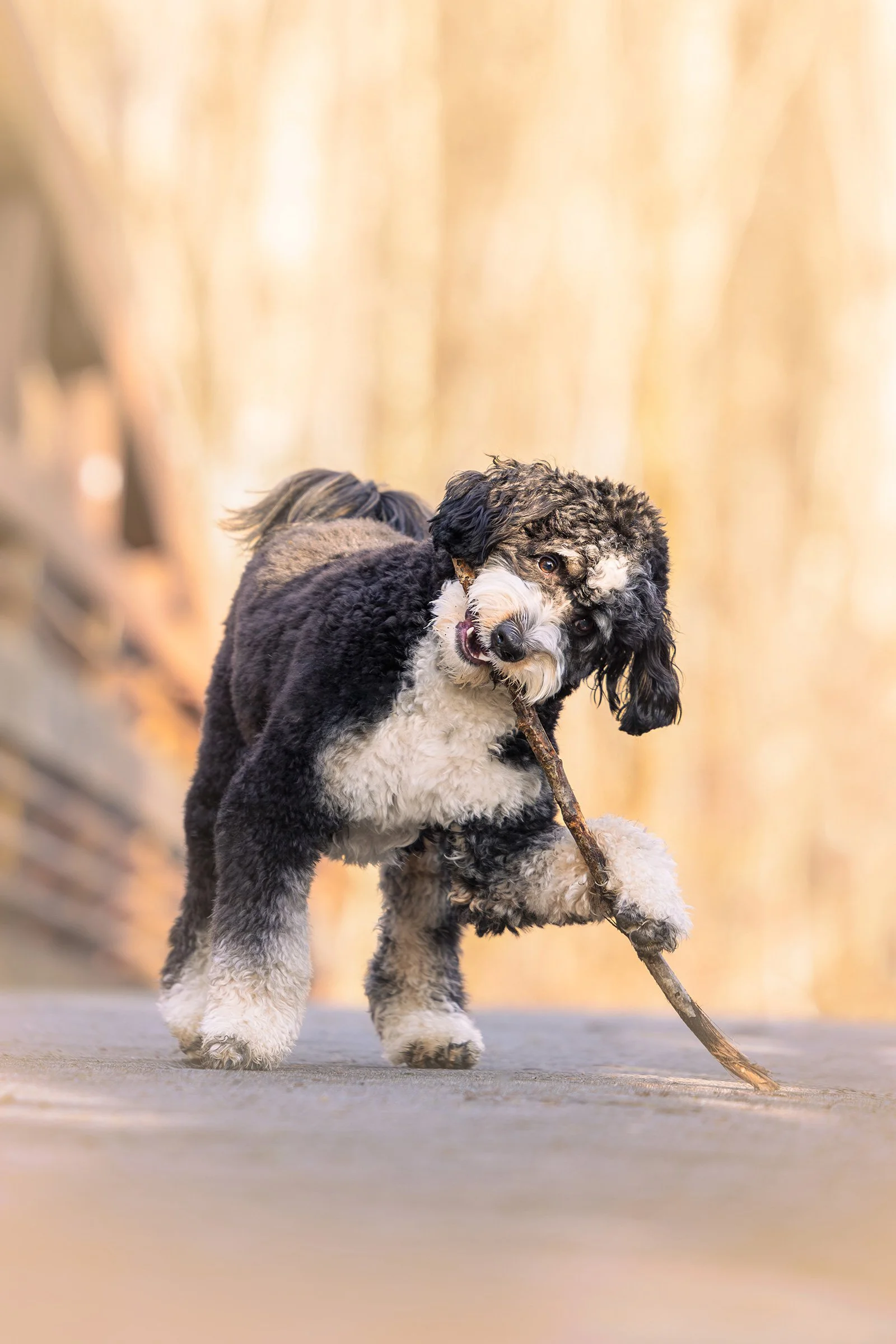
There is no hierarchy of correct choices. A dog whose person walks every day but has never tried puzzle feeders is not doing it wrong. A dog whose person plays a long game of fetch every evening but doesn't go on hikes is not missing something essential. A dog who swims, or does agility, or spends Saturday mornings at the dog park with a devoted owner, is having a different experience from one who does none of those things and also nothing comparable.
What makes the difference — what I see consistently across hundreds of dogs and their people — is not which activities they've chosen. It's the quality of engagement those activities carry. Whether the walk is done with genuine presence or with the phone in one hand. Whether the play session is actually played or performed reluctantly. Whether the enrichment activity is offered with curiosity about what the dog will do, or just left on the floor without interest.
"A dog knows the difference between being exercised and being played with. One is a service. The other is a relationship."
The best version of your dog's physical life is built from the things you'll actually show up for, with your whole attention. Start there.
